Negative interest rates…hmm?
The unending corona virus pandemic is affecting economies in grand ways. Stock markets are crashing, central banks are issuing record stimulus to support citizens, a large pool of work force is now unemployed, and this gloomy wave does not seem to be subsiding any time soon.
To help prevent a significant financial crisis as a result of sinking economic activity, financial institutions and central banks are making crucial decisions to help countries and their people. Among the many dilemmatic decisions is the issue of reducing interest rates to zero and to an extent, having them at negative levels.
This issue caught my attention and thus I decided to try understand what it means to have negative interest rates.
Simple definition of interest rates
An interest rate can be defined as the money paid to a bank as a fee for borrowing their money. For instance, you go to Bank X and borrow kshs. 50,000, to be repaid one year later. The bank agrees to lend you this amount but will charge you for borrowing (interest = rate * amount borrowed). After one year, you’ll therefore pay more as a result of the interest accrued.
From another point of view, an interest rate is also the rate you receive when you deposit money with a financial institution. Say you have kshs. 100,000 in cash that you would like to save with the bank. When you deposit this amount with Bank X for one year, you will later receive your money plus some amount on top for keeping your money with the bank (interest = rate * amount deposited). You’ll therefore sort of get more after one year as a result of the interest accrued.
In a nutshell, those are the basic definitions of an interest rate.
Ordinarily, interest rates are positive and are usually determined by central banks. For instance, the Central Bank of Kenya can decide to set the lending rate at 7.25%. That means, banks will have to use this rate as their yardstick in establishing their own interest rates. This is because, commercial banks take their orders from the central bank.
Negative interest rates
Now with the pandemic we are currently in, people are not spending or even investing as much. Thus, we can say economic activity is subdued. This ain’t good. If people are not spending their money, economic growth is affected, badly.
Thus, to incentivize people to consume, you have to give them money. But how do we get money when we are not working? How can we get ‘free money’? 🙂
Well, the government is ‘somewhat’ there for you. I bet you’ve heard of some governments e.g. the US giving stimulus packages to the unemployed people. This stimulus is like ‘free money’ (I’m sorry economists and finance geeks) to support people during such hard times.
‘Free money’ is one option. The other option is reducing lending rates to almost zero / negative to lure people to borrow.
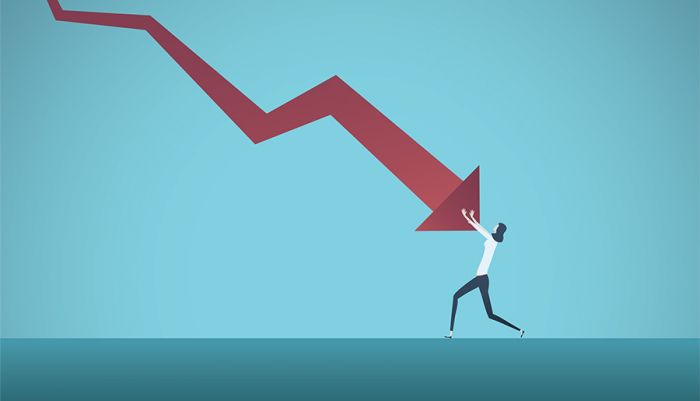
Imagine walking into a bank and borrowing kshs. 1M at 0% interest rate for one year. That means, when the liability is due, you’ll return kshs. 1M only. If the rate was 5%, you would have returned kshs. 1,050,000.
However, if the rate was -5%, you would returned kshs. 950,000. Less than you’d borrowed! Economists describe this ‘as banks paying you to borrow from them’.
On the converse, if you deposited kshs. 1M for one year in a savings account, you’d cumulatively earn kshs. 950,000. Less than you deposited!
Well, Kenya hasn’t reached this stage yet but many countries in the European region are already in the negative interest rate zone.
The intention of having these negative rates has been to encourage people to borrow and spend, so as to spur economies. When people are spending, economies are growing.
There are of course consequences to every action and having negative interest rates is no exception.
When you are ‘paid’ to borrow, it’s obviously exciting but to the banks it’s scary as it would mean reduced margins. Also, when people have a lot of money to spend, the prices of many goods will rise (inflation) due to increased demand relative to supply. Another chilling likelihood of negative interest rates is that depositors will pull their cash out of their banks (what is known as a bank run). This would devastate banks and make them unstable.
However, during extraordinary times such as this, extraordinary measures have to be adopted including introducing negative interest rates to encourage banks to lend. The benefits are many and the negative consequences undesirable.
With much uncertainty and the waves of dooming financial crisis rising, let’s continue praying that the decisions we all make will help the society, that the desired benefits will outweigh the negatives😊.
That’s it for today dear reader. Thank you for reading. Receive a warm loving hug from me❤❤.
Continue staying safe and let’s unify in prayer and support for all the health professionals giving endless support as well as all leaders making crucial decisions at these times.

 frank.finance
Great work there Frank. So educative piece of enlightenment. So timely.
LikeLiked by 1 person
Thank you John. Much appreciated
Take care 🙂
LikeLike
Quick question, maybe I’ve not understood this well. If we get to the point of negative interest rates, and I already had money in a savings account for example, does this mean that now they’ll still deduct from the money there, or will they only deduct from money deposited within the period of negative interest rates?
LikeLiked by 1 person
Hey Val, very good question. Thank you:)
Lengthy answer ahead;
The interest earned on your savings or charged on your loan will usually fluctuate depending on the Central Bank rate.
If the Central Bank of Kenya cuts the current interest rate to say 4%, banks will have to adjust their rates accordingly, in line with the 4%. (e.g. most banks will adjust their rates upwards on loan accounts and downwards on deposits…for more profits of course)
Therefore, in a situation of negative interest rates set by the central bank, commercial banks adjust accordingly and apply their own rates to their existing or/and new deposits (savings) as well as existing or/and new loans.
That means, yes your money in your savings account may be affected and any other future deposits.
However, do not be afraid:) It is very much unlikely such a situation will be experienced in Kenya. We react very easily, so news of your savings being eaten up in our banks will cause large withdrawals…something no bank would ever want, especially in Africa!
Thank you for your question and sorry for the lengthy answer:)
LikeLike